These past two weeks I finished reading The Political Map of Chinese Tobacco.
Cigarettes and Drugs
One day last week, just like always, on the way to work the road was full of young men smoking.
Covering my nose as I walked into the company, I felt I really couldn’t understand:
Why aren’t cigarettes considered drugs?
Most smokers can’t just quit smoking whenever they want to,
and even when external forces interfere (family opposition, banned in public places),
these smokers still find chances to smoke.
Since this mental dependence already counts as addiction,
then why don’t we consider cigarettes drugs?
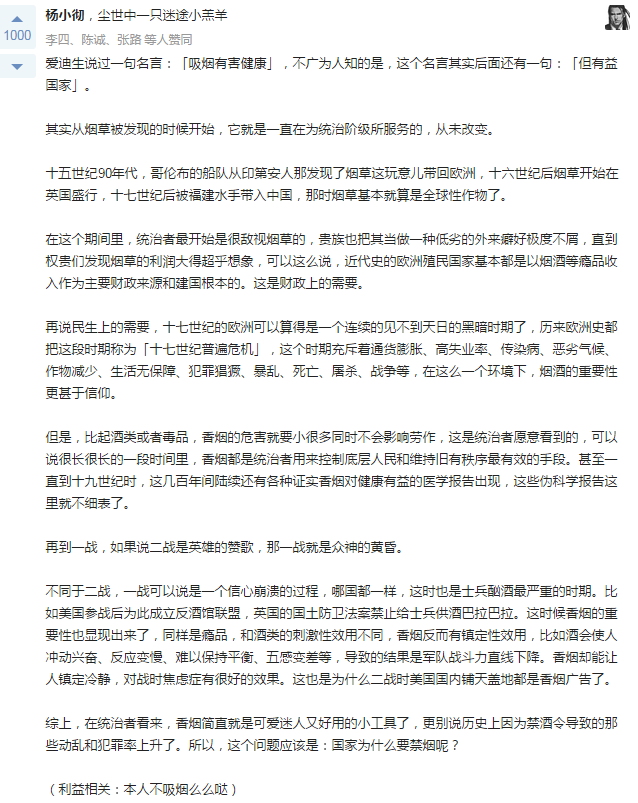
So I searched a bit, and the mainstream view is like this:
Zhihu’s answer
Reddit’s answer
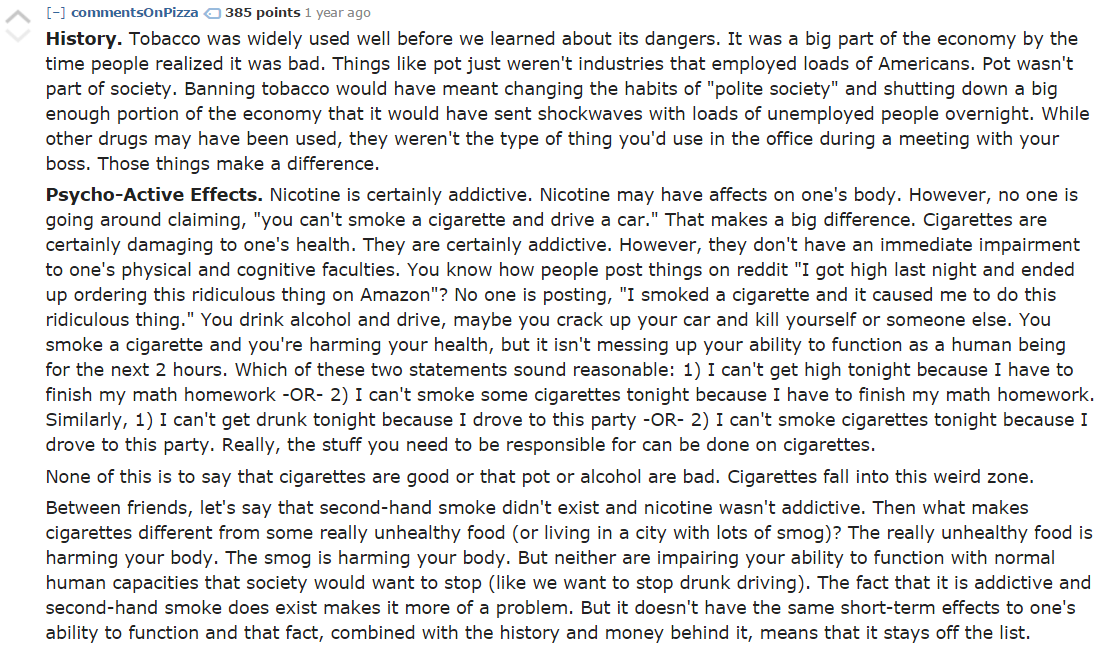
It seems the cigarette problem exists both in China and abroad. To summarize there are three points:
The word “drug” is more in the legal sense; in English, drug can also mean medicine.
So “cigarettes are drugs” is not a rigorous enough statement.Since long ago, tobacco has been an industry, and now the tobacco industry has only grown bigger.
As a major source of national revenue, and to accommodate smokers’ feelings, a complete smoking ban is unrealistic.From an individual perspective, cigarette addiction only harms one’s own body, not society.
Alcoholism causes car crashes, cannabis causes hallucinations, smoking only causes early death.
The Political Map of Chinese Tobacco
To look at the issue more rigorously, and to work on this year’s reading plan,
I read Li Cheng’s The Political Map of Chinese Tobacco.
This relatively thesis-like book mainly talks about the current state of Chinese tobacco,
the health impacts that smoking may bring at the national level,
a top-to-bottom analysis of Chinese cigarettes,
and policy suggestions for managing these issues.
The whole book has a very academic flavor,
basically no narrative quality (and there shouldn’t be),
but it’s still engaging to read.
For example, some data in it is very thought-provoking:
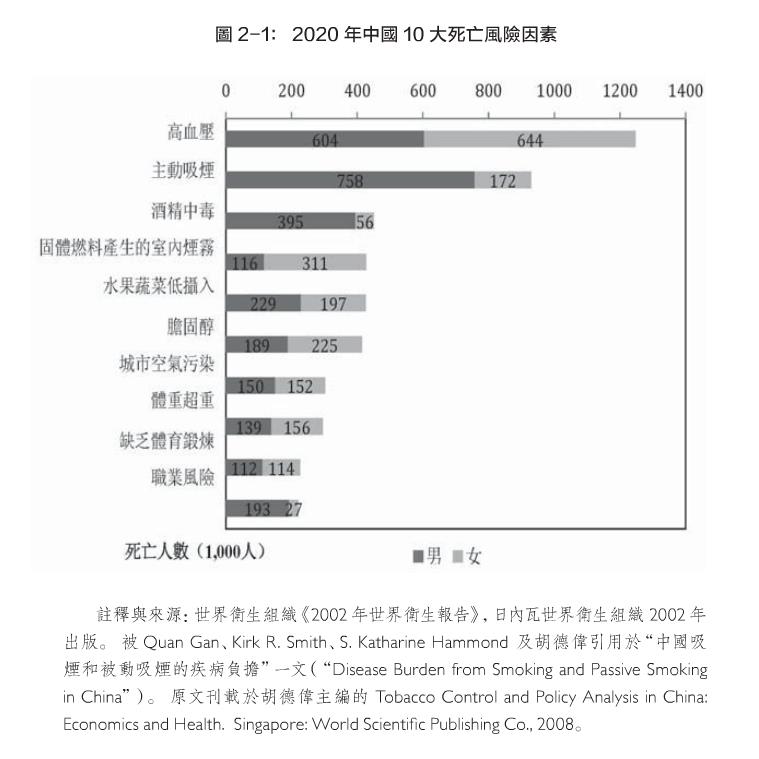
We all need to exercise more
As the author says,
on one hand things are getting better,
the proportion of Chinese smokers is declining,
and people are also bottom-up awakening to health awareness.
But on the other hand things aren’t that great…
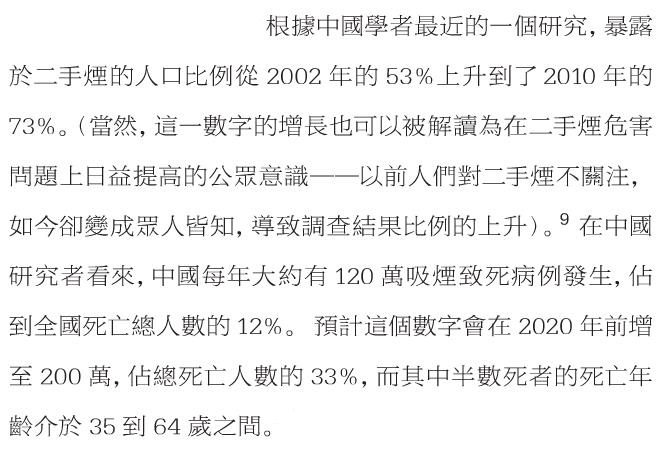
The author says
My Vision
I started hating cigarettes purely because I found the smell too choking.
While being grateful no one in my family smokes,
I also gradually came to feel that cigarettes are even more of a social issue:
For the country, the cigarette industry is a major tax contributor.
But from a public health standpoint, banning smoking can improve national physical fitness
and avoid the medical expenses brought by smoking.For Chinese society, smoking premium cigarettes is a status symbol, and cigarettes themselves as gifts are universal.
(What if we printed scary lung cancer pictures on all cigarette packages…)For low-income smokers, a pack of cigarettes can satisfy them on a mental level.
(All they pay is money and a tiny bit of their lifespan.)
So rationally speaking, smoking is indeed harmful to health, but there will always be people who don’t care about their own or others’ health.
As society develops, the problems brought by tobacco will gradually be exposed,
but this also provides an opportunity to solve the tobacco problem.
Overall, I hate the smell of smoke, I hate the health problems smoking brings,
I hope everyone can live longer.
Hope the world gets better and better.